


SUP Sailing vs. Windsurfing: Key Differences Explained

Stand up paddleboarding has always been about freedom: grab a board, grab a paddle, and get on the water. But what happens when the wind picks up? That is where SUP sailing comes in.
SUP sailing gives paddleboarders a way to use the wind for extra glide, distance, and fun. It is not the same as traditional windsurfing, and not every SUP sailing option works the same way. Some systems require a separate mast, boom, sail, mast base, and a compatible board. Sailpaddle is different because the sail is built directly into the paddle shaft, so there is no extra rig to carry, attach, or set up. A Sailpaddle has the sail stored inside the paddle shaft, so it is already with you when the wind comes up. Just pull it out, catch the wind, and switch from paddle power to wind power in seconds.
What Is SUP Sailing?
SUP sailing is a way to add wind power to a stand up paddleboard. Instead of relying only on paddle strokes, the rider can catch the wind and let it help move the board.
Some SUP sailing setups look more like small windsurfing rigs. For example, traditional SUP sail packages may include a sail, mast, boom, mast base, mast extension, and uphaul cord. The Jobe Mohaka SUP Sail package, for example, uses a 3.5 m² sail with a mast and boom, and is designed to convert a compatible SUP into a windsurf-style setup. Sailpaddle takes a simpler approach. Instead of adding a separate sailing rig to the board, the sail is already built into the paddle. You paddle normally, pull out the sail when the wind is right, let the boom drop into place, sail, and then push the sail back into the paddle when you are done.
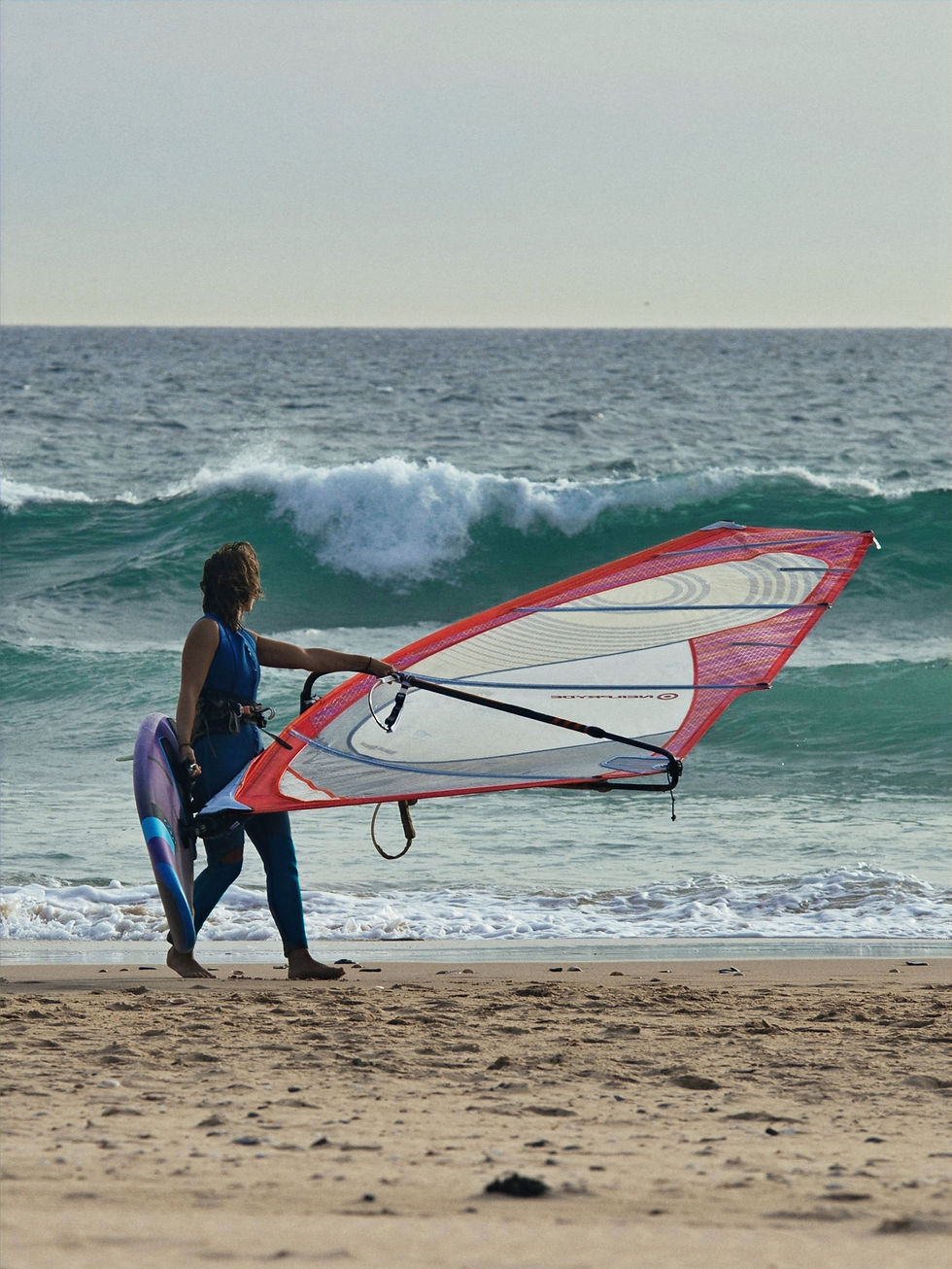
What Is Windsurfing?
Windsurfing is a separate board sport that uses a board, mast, sail, boom, and rigging system. The rider controls the sail with the boom and
uses body position, board control, and wind direction to sail. Windsurfing can be exciting and high-performance, but it also involves more gear and more setup than ordinary paddleboarding.
SUP Sailing vs. Windsurfing: The Main Difference
The biggest difference is the amount of equipment and setup.

Windsurfing is built around a full sailing rig. Some SUP sail kits also require extra parts, such as a mast, boom, sail, base, and a compatible board. Sailpaddle is designed for paddleboarders who want wind-powered fun without turning their board into a full windsurfing setup.
Sailpaddle
Best for: Casual paddleboarders who want to paddle and sail with one piece of gear.
Gear needed: One paddle with the sail stored inside the paddle shaft.
Setup: Pull the sail out, let the boom drop into place, sail, then push it back in.
Storage: No separate sail bag, mast, or boom to carry.
Main advantage: No extra gear, no complicated setup — just paddle, then sail.
SUP Sail Kit / WindSUP Rig
Best for: Paddleboarders who want a more windsurf-style setup.
Gear needed: Usually a separate sail, mast, boom, mast base, and compatible board.
Setup: Requires rigging and attaching the sail system to the board.
Storage: Separate parts must be carried, stored, and transported.
Windsurfing
Best for: Riders who want a dedicated wind-powered board sport.
Gear needed: Windsurf board, sail, mast, boom, extension, base, and rigging.
Setup: Full rigging process before getting on the water.
Storage: Multiple pieces of equipment.
Main advantage: More performance and control, but more gear and a bigger learning curve.
Why Sailpaddle Is Different
Sailpaddle is not trying to replace windsurfing. It is a different idea.
The advantage is convenience. You do not need to bring a separate sail bag. You do not need to attach a mast to your board. You do not need a special windsurf board insert. You do not need to stop and rig a sail on the beach.
With Sailpaddle, the sail is inside the paddle. That means your wind option is already with you.
For paddleboarders, this matters. Wind often comes up after you are already on the water. With a normal paddle, wind can turn the trip back into a workout. With Sailpaddle, the same breeze can become part of the fun.
How Sailpaddle Compares to Other SUP Sailing Devices
Other SUP sailing products can be useful, but many are separate systems. Some attach to the board. Some require a mast base. Some are closer to windsurfing. Retailers describe SUP sail categories by sail size, mast compatibility, rig type, and board compatibility, because those details matter when choosing a traditional SUP sail setup.
Sailpaddle removes that extra step. It is not a separate sailing kit. It is a paddle first, with a sail built inside. That makes it especially useful for people who want a simple, all-in-one option.
Instead of asking, “Did I bring the sail?” the answer is already yes — because it is in your paddle.
Is Sailpaddle the Same as Windsurfing?
No. Sailpaddle is not the same as windsurfing.
Windsurfing is a full sport with larger sails, specialized boards, and more technical control. Sailpaddle is better described as wind-assisted paddleboarding or casual SUP sailing. It is for people who want to paddle normally, then use the wind when conditions are right.
That is actually the point. You do not have to choose between paddleboarding and sailing. You can do both with one piece of gear.

Who Is Sailpaddle Best For?
Sailpaddle is a good fit for:
Paddleboarders who want more fun when the wind comes up
Beginners who do not want a full windsurfing setup
Families who want simple gear
Lake, harbor, bay, and calm-water paddlers
Anyone who wants to paddle out and enjoy wind-assisted cruising
It works best when the wind is at your back or coming from a helpful direction. It is not meant to be a full sail rig or a high-performance windsurfing replacement. It is meant to make everyday paddleboarding more fun.
Another Difference: You Still Have a Paddle
Another important difference is that with Sailpaddle, you always still have a paddle. If the wind dies, changes direction, gets too strong, or you enter a crowded area, you can push the sail back into the paddle shaft and go back to paddling.
That makes Sailpaddle different from windsurfing. With windsurfing, you are managing a full sail rig. With Sailpaddle, you can use the wind when it helps, then stow the sail and paddle where you need to go.
This also matters in places like harbors, marinas, and lakes. Some areas may restrict windsurfing or limit where sail-powered boards can operate, so riders should always check local rules first. Sailpaddle keeps things simpler because it starts as a regular paddle and is best used for relaxed downwind runs, not zigzagging back and forth across a busy harbor or lake.
For everyday paddleboarders, that is a big advantage: paddle when you want, sail when the wind helps, and keep the gear easy.
Final Thoughts
SUP sailing and windsurfing both use wind power, but they are not the same experience. Windsurfing is a dedicated sport with a full rig. Traditional SUP sail kits can turn certain paddleboards into wind-powered boards, but they usually require extra equipment.
Sailpaddle is different because it keeps everything simple. The sail stores inside the paddle, deploys in seconds, and stows away when you are ready to paddle again.
No extra gear. No complicated setup. Just paddle — then sail.
A standard windsurfing rig requires the right sail, mast, boom, extension, and setup. Windsurfing equipment guides explain that mast length, boom size, sail size, and rig compatibility all matter.
That is great for people who want to learn windsurfing as its own sport. But for many paddleboarders, the goal is simpler: paddle when you want, sail when the wind helps, and keep the gear easy.
Comments